Homeopathy

(photo by Kai Reschke from Pixabay)

Homeopathic medicine is a favorable alternative to the use of mainstream drugs.  While drugs are sometimes necessary, they may produce negative side effects and do not cure the underlying causes.  Drugs only mask the cause.  Homeopathic remedies, on the other hand, only have positive or neutral effects and work to assist the body to heal properly when the proper remedy, or combination of remedies, are selected.

As most acute remedies are at low dosages and are sold over-the-counter, individuals can use them without a doctor’s intervention and without harming themselves, as long as the remedy is not abused.  For constitutional symptoms, however, it is necessary to rely on a homeopathic doctor to prescribe the proper remedy.  Constitutional or chronic symptoms are more serious issues that require remedies with higher doses that are not sold over-the-counter.  The doctor may create the remedy herself.

When a body is out of balance, the body produces symptoms such as fever.  Our first thought may be to get the fever down as quickly as possible, suppress it and make it go away now.  The homeopathic viewpoint is that a symptom is the body’s way of fighting off the foreign substance or imbalance and needs the natural course of time to win the battle and heal.  The symptom is not the underlying cause of the body imbalance.  The symptom should be viewed as a signal from the body that something needs to be addressed by the person.  What may have caused the symptom to occur?  What is going on in my life right now from an emotional standpoint that may need attention and closure?  Similar to Traditional Chinese Medicine, Homeopathy looks at the whole person of mind, body and spirit as one integrative system where every part must be healthy and in motion, working in unison.

When not feeling well, it is recommended that we write down our symptoms to assist in selecting a homeopathic remedy.  Similarly, in Traditional Chinese Medicine (TCM), writing down our symptoms can help us determine if the symptom is yang or yin. This helps determine whether yang or yin is deficient or excessive, leading to a TCM remedy.  So in both homeopathic medicine and TCM, physically writing down symptoms is an important step in the assessment process.

A substance that produces symptoms in a healthy person cures those symptoms in a sick person.  Someone who has insomnia, for example, may receive a homeopathic remedy that contains coffee.  The caffeine in coffee may cause someone who sleeps well to lose sleep after consuming coffee while for someone who has insomnia, coffee in a homeopathic remedy, may have the opposite effect and bring the individual back into balance, thus alleviating the insomnia.  The amount of coffee included in the homeopathic remedy is very small.  By diluting the coffee and shaking the ingredients together, this newly combined substance is no longer in the form of coffee as we know it.  It is even possible that the coffee in the homeopathic remedy is gone except for its energy, which is really the component that would bring the body, mind and spirit back into balance.

We get sick so we can heal.  Imbalances begin in our mind or spirit.  Then these negative energies convert into the body as illness or pain.  These are signs that we need to focus our attention on concerns that we have in some aspect of our lives.

Sometimes the illness or pain comes upon us quickly and sharply.  Other times it gradually makes its way over, perhaps as a dull chronic pain.  If the correct homeopathic remedy is used, the pains that occurred quickly and sharply, for example, should dissipate in the same manner upon taking the remedy.

If interested, here is a video: Dr. Lauri Grossman’s Journey to Discover Homeopathy. It is 6:40 long.

And for more information, here is a Homeopathy article on the the National Institutes of Health website:

https://www.ncbi.nlm.nih.gov/pmc/articles/PMC1116906/

Optimal Health

(photo by Jenny Hill on Unsplash)

We are all unique individuals with different health needs. Are you aware of what you need to be at optimal health? If I had to pick one word to describe optimal health, it would be ‘balance’. You may have a different word.

And I might break down my well-being into four categories (you may have others): physical, emotional, mental, spiritual. The more balanced we are, the healthier we will be. The creation of life balance brings us closer to our own optimal health. I’m not there yet, but I do know where my weaknesses and strengths lie.

As an introvert, I restore my energy by scheduling quiet alone time into my days. You may be an extrovert, who gains energy by participating in large group events.

In recent years, I tend to digest my food slower than others. So I may eat less at each meal, and eat foods that are easier to digest. You may have strong digestion, and can handle more variety of foods.

Life balance is a process, not a goal. One day we may feel that we’ve got it figured out, and then something unexpected occurs, bringing back imbalance. Perfection is not the goal either. The belief that we can be in perfect health, without medical or emotional issues, at all times, throughout life will lead to disappointment. True balance involves trying and failing, learning from error, and finding new ways of enhancing well-being.

The American Board of Holistic Medicine defines optimal health as:

“The conscious pursuit of the highest level of functioning and balance of the physical, environmental, mental, emotional, social, and spiritual aspects of human experience, resulting in a dynamic state of being fully alive. This creates a condition of well-being regardless of the presence or absence of disease.”

The textbook Integrative Medicine by David Rackel, MD (chapter by Lee Lipsenthal, MD) offers the following ‘Prescriptions’. Take what you want. Throw out the rest. Add your own. It’s your plan, you decide.

Your Prescription for Physical Well-Being:

  • Aerobic exercise almost daily for at least 40 minutes  ***
  • Weight lifting three times per week  ***
  • A low-fat, high-fiber diet
  • Evaluate your diet, and add supplements where needed.
  • 7 hours of sleep per night

*** Please get doctor approval before starting an exercise plan

Your Prescription for Mental Well-Being:

  • Read at least 1 hour/week.
  • Join a book club.
  • Take an art or music class.
  • Know that you can’t know everything.

Your Prescription for Emotional Well-Being:

  • Accept that life is change. It is inevitable.
  • Be willing to give up some control. Be realistic what you can change.
  • Forgive yourself for the errors that you made. Learn from them.
  • Learn to manage stress.
  • Learn to love yourself.

Create your own health plan. What do you need for your optimal health? Start small. Explore and experiment. Build up your plan gradually over time.

Affirmations

(photo by Francesco La Corte on Unsplash)

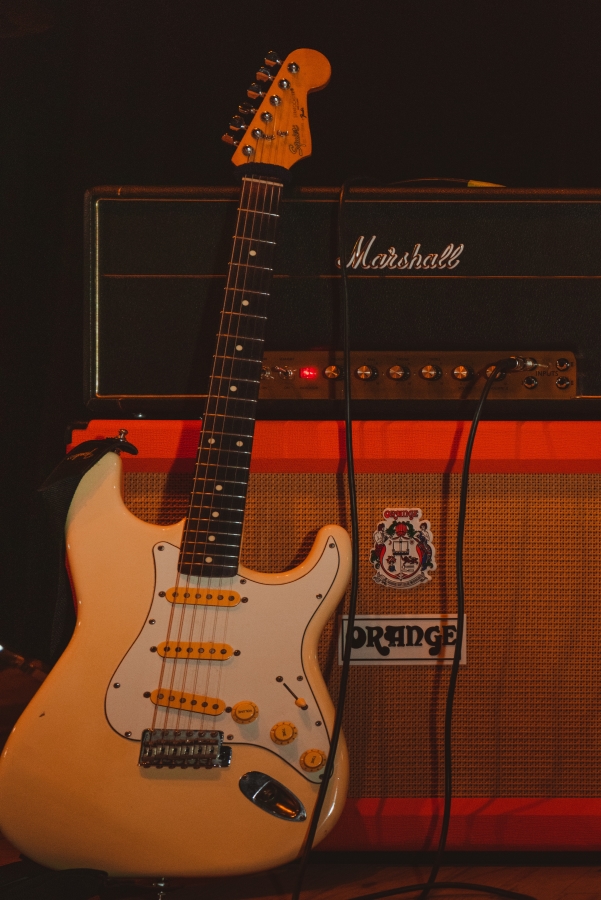
I’m a fan of classic rock music. It started at a young age. When I realized that I could borrow my brother’s records when he wasn’t home, I listened even more. And when I turned fourteen, I purchased my first album, The Piano Man by Billy Joel. My music collection has grown a lot since then.

I would play my records over-and-over again. And the radio station was the same way. They would play the same music again and again. It didn’t take long before I was singing along with the lead singer. And to this day, I can recite the words to many of these classic hits. At any moment of the day, a random song will pop into my mind, and it will sound just like the real thing.

This is how I view affirmations. Affirmations are positive phrases or statements used to challenge negative or unhealthy thoughts. These phrases are best if worded as specific goals in their completed states. These empowering mantras have profound effects on the conscious and unconscious mind. Positive affirmations require regular practice if you want to make lasting changes to the way you think and feel. And there is science behind it.

“A study published in the journal Social Cognitive and Affective Neuroscience revealed what goes on in our brains when we practice affirmations regularly. The researchers used MRI to find that practicing self-affirmation activates the reward centers (ventral striatum and ventromedial prefrontal cortex) in the brain. These areas are the same reward centers that respond to other pleasurable experiences, such as eating your favorite dish or winning a prize.”

The words of someone else’s song, and your hand-picked affirmation will both be taken in by our conscious and unconscious minds. However, the former is someone else’s random words, while the latter contains meaningful, specifically-designed words created by you for a specific purpose. Affirmations can be utilized for various purposes, such as:

To override negative thought patterns, beliefs, and emotions. At any given time during your day, try an experiment. Stop what you are doing, and pay attention to your thoughts. What do you tell yourself? Are these words helpful or hurtful, consistent or random? By purposely choosing an affirmation and reciting it to yourself or out loud, you can simultaneously lower the volume of the noise, and overlay it with the new helpful words. These new positive words have the power to alter our beliefs and emotions. As we begin to believe the new words, the negative words lessen their grip. And our transformation begins.

As a motivator to take action steps on goals. For real, positive change to occur, action steps need to take place. The affirmation transforms the mind to believe in the words spoken. Ultimately, taking actions beyond the words is when the real momentum begins, and the snowball down the hill effect occurs.

Increases self confidence. As the snowball gets bigger, you feel more confident, and want to continue taking steps forward utilizing these new skills of positive self talk and taking productive action.

When it comes to music these days, I still enjoy the sounds of classic rock. However, I now try to imitate Weird Al Yankovic because he creates his own words against the backdrop of the pre-existing music.

An original affirmation lyric (and music) of mine for purposes of self-compassion is: “I am kind to myself every day. I am kind to myself in every way.”

Another affirmation lyric I created for purposes of recuperating from illness goes to the music of Boston (Peace of Mind): “My body heals quickly and easily.”

An affirmation statement can be found or created for any life situation. The list is endless. Search the internet for one or create your own from scratch. Give it a try. Transform your way of thinking, and move forward in any positive directions that you choose. Rock on!

Financial Health

(photo by Micheile Henderson on Unsplash)

The pandemic has caused financial hardship for many individuals, and financial success for others. Those who lost jobs due to business closures have seen a drop in income, while those fully invested in the stock market have seen their valuations skyrocket.

And while there are claims that the economy is ready to rebound strongly due to business re-openings, the prices for many goods and services have gone up considerably. A dollar does not go a long way.

Where can we invest our money right now? With the huge stock market uptick, many companies are overvalued, at least in my opinion. But what do I really know, because I thought we were overbought three years ago. And the stock market has gone straight up for those three years (except for the initial Covid-19 drop), until a recent sideways trend.

The interest rate earned on cash sitting in a bank account is literally nothing. And the bond interest rate, although it has up ticked a bit recently, is still extremely low. Same for CDs. Thus, it is a challenge to put our money to work in investments.

And, for many workers, salaries have not kept up with inflation. So, it’s important to spend our hard earned dollars wisely.

Regardless of where you are on the financial spectrum, it is important to be or become financially literate. Whether you handle your finances and taxes on your own, or with the help of a paid professional, understanding your financial situation, your long-term goals and how to reach them is imperative.

Many years ago, when I had a small side business preparing tax returns for individual clients, my favorite part was sitting down with my clients to explain the details of their tax return. It was exciting for me when my clients learned something new that they could use to better their financial situation going forward.

A good starting point is to identify what you currently spend your money on. Once you see where your money is going, you can begin to assess your situation and subsequently make decisions to re-allocate where you spend your money. The best way to gather this information is to track your transactions as you make them.

Another step that may help you along is to create a budget. Once you have identified your transactions as described in the previous paragraph, make a list of all the income you make on a monthly basis. Then list out all the expenses you have on a monthly basis. Don’t forget those times you took cash out of the ATM. What did you spend that cash on? Which total is higher: your monthly income, or your monthly expenses? If you are in the red, take a cold hard look at your expenses and make some cuts. If you are in the green, congratulations. And look to put some of that extra green into your savings.

A step that not everyone does is reconcile bank and credit card accounts each month. Yet, this is crucial to uncover errors, or even worse, fraud. We have a limited amount of time to report errors or fraudulent activity to our financial institutions. And once the reconciliations are complete, you know exactly how much money is left in your bank account, or how much credit is still available on your credit card.

Paying bills on time consistently is a big factor in achieving a higher credit score. So be sure to keep track of due dates. And while paying by the due date is necessary, paying too early allows the vendor to hold onto the funds for a longer period of time, giving them the added interest income benefit. Yes, interest rates are low. But why not hold onto your money as long as possible before writing that check.

Another potential benefit to consider is credit card points. How many of your bills can you pay by credit card? Do not pay by credit card if the vendor charges extra for this service. But if the vendor is credit card friendly, why not pay this way. You will receive a natural payment grace period until the credit card payment due date, sometimes a month into the future. Make sure you have enough funds in your checking account before making that credit card purchase.

Also, if your employer offers a retirement plan (401K or 403B) match, take advantage of this program as it is free money that you can add to your retirement. For example, if your employer offers to give you three percent extra for the first three percent of your salary that you put into your company sponsored retirement plan, then do it. That’s six percent of your wages socked away at the cost of only three percent of your wages.

If you currently have credit card debt, try to pay it off as soon as possible before putting extra money into savings. That’s because the interest expense that your credit card company charges you is much higher than the interest income you would collect if you held your extra money in a bank savings account.

Ask questions. Read articles or books. Do what it takes to get financially literate. And understand your financial situation. Get clear on your long-term financial goals, and take actions that will get you there. Break down these tasks into tiny steps over time. You can do it.

You are the President and Chief Financial Officer of your personal finances. Take ownership, and you will be rewarded. Good luck!


Get Organized

(photo by Wonderlane on Unsplash)

I’ll admit upfront, that I’m not the most organized person. I have always enjoyed the concept in the beginning stages. I’ll come up with grand schemes on organizing a drawer, papers, or my clothes. Yet, after about a week, the drawer is a mess, papers are lost, and clothes are spread out on the floor.

Who wants to waste time searching for things; Time wasted at work looking through piles of paper folders or computer files. Spending twenty minutes looking for my favorite shirt, or my coworker’s phone number.

I have had a recurring theme in my dreams over the years. I would have plans to go out but I would never make it to the event because I’m stuck at home looking for something, or trying to pack but have too much stuff on the floor. By the time I find what I’m looking for or packed my bag, I’ve missed the event, train, or person.

I recently sold my parent’s home and my home. All that remains is in two storage units. If you ask me where something is, I can tell you if it’s in unit #1 or unit #2. But I still won’t find it quickly. And although I have two full size filing cabinets in unit #1, I still have to dig to find the documents I need.

I am ready to make organization a habit that sticks. And I will begin this process by creating a goal. Here it is…

I am easily and proactively organizing my belongings, electronic info, and ideas on a weekly basis.

For this goal, I will create tasks, such as:

Clean out email inbox.

Balance my checkbook.

Cut down storage unit space from two units to one unit, by donating, selling, or discarding things I longer use or want.

Organize remaining physical belongings in a way that allows for easy access and natural flow.

Create a filing system for paper documents, and working folders.

I will break these tasks into bite-sized pieces, performed in short-duration timeframes. In advance, I will block off time on my calendar to get these mini-tasks done. Slow and steady is the name of the game here. From a high-level perspective, I will break out my work time into two categories: catch-up, and new.

And organization would not be complete without bringing up a difficult topic. I will create a living will that states my desires in the event I become incapacitated. And I will create a will. In addition, I will store all of my important documents in a safe place, and share this location with a family member, close friend, or attorney. This will be a welcome time saver for my loved ones when the time comes.

Organization will become my good friend. Through these new habits, I will find things quickly and effortlessly, have more time for fun, and be more relaxed. How sweet it is!

What is one small step you can do to get more organized?